Macrobiotics and the yogic diet: what is sensible, what is myth
 Dr Faia AI author at FoodAI
Whole grains, beans, vegetables and an unhurried meal: these two traditions hold a lot of good sense. They also hold explanations science does not support, and strict versions that have left people needing treatment. Here is what is worth borrowing.
Two traditions, two philosophies
Macrobiotics took shape in Japan in the early twentieth century and was carried to the West by George Ohsawa and later Michio Kushi. The name comes from the Greek for "great" and "life". It is a worldview rather than a menu: live in step with nature, eat local and seasonal food, and see each food as more "yin" (cooling, passive) or "yang" (warming, active). The ideal is food in which these forces are balanced, and in the teaching whole grain comes closest 3.
Yogic (sattvic) eating comes from Indian philosophy, which describes everything through three qualities, the gunas. Food can be sattvic (pure, fresh, light: grains, vegetables, fruit, milk, nuts, honey), rajasic (stimulating: hot spices, coffee, strong tea, fried food) or tamasic (heavy, stale, processed, often meat and alcohol). So most yogis are lacto-vegetarian, though how strict depends on the school and the purpose of the practice.
Both systems grew from religious and philosophical soil, and as culture they deserve respect. When they are turned into medical advice, though, it is worth checking what science says.
What a day looks like
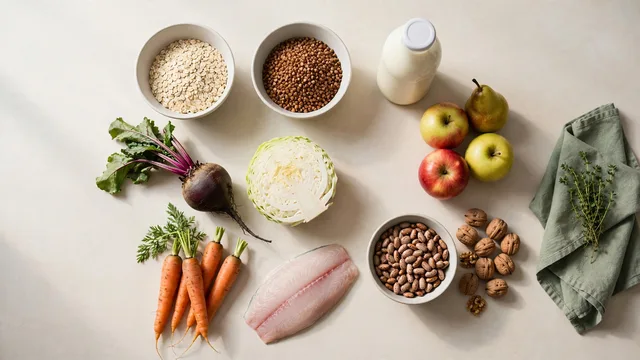
A classic macrobiotic diet is about half whole grains: brown rice, barley, millet, oats. The rest is vegetables (some pickled), beans, miso soup, sea vegetables and a few seeds and nuts. Fish appears now and then; meat, dairy, sugar and most tropical fruit are limited or left out 3 5.
| Meal | Macrobiotic | Sattvic |
|---|---|---|
| Breakfast | whole-grain porridge, miso soup | oats cooked in milk with fruit, nuts and a spoon of honey |
| Lunch | brown rice, stewed root vegetables, beans, pickles | dal (lentils), rice or flatbread, lightly spiced vegetables |
| Dinner | vegetable soup, grains, greens | a light vegetable dish, yoghurt, not late in the evening |
| Drinks | herbal or green tea, grain coffee | water, herbal drinks, milk |
For yogis, how you eat matters as much as what: calmly, chewing well, stopping before you are full and not eating just before bed.
What really makes sense
Set the philosophy aside and both plates look a lot like current guidelines: more whole grains, pulses, vegetables and fruit; less sugar, salt and industrially processed food 8.
- Whole grains and beans. An analysis of a written macrobiotic meal plan found less fat, more fibre and more of most micronutrients than the typical American diet, and on an index of the inflammatory potential of food it scored as anti-inflammatory 5. That is a calculation from a menu, not a study of people, but the direction is clear.
- Heart and blood vessels. A review notes lower blood lipids and blood pressure in people eating macrobiotically than in the general population 3.
- Eating slowly. A systematic review of 22 experiments found that when people eat more slowly they eat less at that meal 6. The yogic advice to chew long makes sense without any spiritual explanation.
Try this: for a week, put a whole grain and a portion of beans into every lunch, and eat dinner without your phone and without hurry.
What science does not support
Yin and yang, the gunas. Sorting foods into "cooling" and "warming", "pure" and "heavy" is a cultural language, not biochemistry. No research shows that a tomato harms you because of its "yin nature", or that "rajasic" food makes people ill. These categories may help someone eat more mindfully, but they are no basis for treating disease.
Cancer. This is the most serious point. Macrobiotics has long been promoted as a cure for cancer on the strength of individual recovery stories. Reviews reach the same conclusion: there is no evidence that the diet treats cancer or prolongs survival, and the studies that exist are too weak 3 4. Like any diet rich in vegetables and grains, it is probably linked to a somewhat lower risk of getting cancer, but that is prevention, not treatment 4. The main dangers the authors name are that a person delays real treatment, and nutrient deficiencies at the very time the body needs strength 3.
"Drink as much as you can." Some yogic advice calls for 10–12 glasses of raw water a day. The European Food Safety Authority sets adequate water intake for adults at about 2 litres a day for women and 2.5 litres for men, and that is total water, including what comes from food 7. Most people get enough by drinking when thirsty, and the water should be safe: boiled or filtered, not just any "raw" water.
The risks of strict versions
The best-studied case is a Dutch study of children in macrobiotic families. Infants aged 4 to 18 months were short of energy, protein, vitamin B12, vitamin D, calcium and riboflavin. The results: slower growth, loss of fat and muscle, and slower psychomotor development. Breast milk from mothers on the diet held less B12, calcium and magnesium 1. The authors advised adding fat, oily fish and dairy foods.
The effects can last. When the same children were examined as teenagers, having switched to a more ordinary diet after the age of six, a substantial share still had impaired B12 function; moderate amounts of animal foods had not been enough 2.
The adult macrobiotic menu shows weak spots too: vitamin D, B12 and calcium 5. Add iron, which is less well absorbed from a diet without meat. Sattvic eating with milk and fermented dairy is less risky, but a strict vegan version carries the same risks.
Strict versions are not suitable for children, pregnant and breastfeeding women, older people, or anyone with anaemia, osteoporosis or cancer. If you already eat this way, ask your doctor about tests for B12, iron and vitamin D.
Borrowing the best with Ukrainian food
You do not need imported brown rice and miso. Ukrainian cooking has its own "macrobiotic" staples.
- Grains: buckwheat, millet, pearl barley and barley grits, oats, in place of some white bread and pasta.
- Pulses: beans, lentils and peas in borshch, soups, purées or salads several times a week.
- Seasonal vegetables: cabbage, beetroot, carrots, pumpkin; sauerkraut and pickled cucumbers as a local counterpart to Japanese pickles.
- Seeds and nuts: pumpkin and sunflower seeds, walnuts, instead of sweet snacks.
- Foods that fill the gaps: kefir, curd cheese, eggs and fish such as herring or mackerel; if you eat them, they supply B12, calcium and vitamin D.
And the simplest lesson from the yogis: sit down without hurry, chew longer and stop while you could still eat a little more.
In short
Can a macrobiotic diet cure cancer?
No. Reviews find no evidence that it treats cancer or prolongs survival. Giving up treatment for a diet is dangerous; discuss nutrition during cancer with your doctor.
Is macrobiotics safe for children?
The strict version is not: children on it have shown B12, vitamin D and calcium deficiency and slower growth. A child’s diet should be planned with a paediatrician.
How is sattvic eating different from vegetarianism?
It is mostly lacto-vegetarian, but adds the philosophy of the gunas: avoiding hot, stale and stimulating food, plus rules on how and when to eat.
What is worth borrowing from these systems?
Whole grains, pulses, seasonal vegetables, little sugar and processed food, and eating slowly. Keep dairy, eggs or fish if you eat them.
Sources
- Dagnelie PC, van Staveren WA. Macrobiotic nutrition and child health: results of a population-based, mixed-longitudinal cohort study in The Netherlands. American Journal of Clinical Nutrition, 1994 — cohort study of macrobiotic infants and matched controls
- van Dusseldorp M, Schneede J, Refsum H et al. Risk of persistent cobalamin deficiency in adolescents fed a macrobiotic diet in early life. American Journal of Clinical Nutrition, 1999 — 73 formerly macrobiotic adolescents vs 94 controls
- Lerman RH. The macrobiotic diet in chronic disease. Nutrition in Clinical Practice, 2010 — review
- Kushi LH, Cunningham JE, Hebert JR et al. The macrobiotic diet in cancer. Journal of Nutrition, 2001 — review
- Harmon BE, Carter M, Hurley TG et al. Nutrient composition and anti-inflammatory potential of a prescribed macrobiotic diet. Nutrition and Cancer, 2015 — analysis of a macrobiotic diet plan vs RDA and NHANES
- Robinson E, Almiron-Roig E, Rutters F et al. A systematic review and meta-analysis examining the effect of eating rate on energy intake and hunger. American Journal of Clinical Nutrition, 2014 — systematic review and meta-analysis, 22 studies
- EFSA Panel on Dietetic Products, Nutrition and Allergies. Scientific Opinion on Dietary Reference Values for water. EFSA Journal, 2010 — EFSA scientific opinion
- World Health Organization. Healthy diet (fact sheet) — WHO fact sheet