Homemade sauerkraut with carrot
Traditional in: Ukraine
Open in FoodAI ShareThere you can change the servings, mark what you have and get swaps for your way of eating.
Open in the professional calculator
Best timeVitamin C for the whole winter and the base for kapusniak, varenyky and vinaigrette.
29kcal · per serving
1 gProtein
0 gFat
4 gCarbs
Fibre: 3 g per serving
Technological calculation (FoodAI Pro)
The full composition per serving — vitamins, minerals, saturates, sugars, salt — calculated with the cooking yield, nutrient losses in cooking and trimming losses, is available to registered users. Registration is free. Register · Sign in
Fits these diets
VegetarianVeganPescatarianLenten fastLacto-vegetarianHalal-styleKosher-styleNo porkGluten-freeDairy-freeNo eggsNo nutsNo fishNo seafoodNo soyNo sesameNo alcoholLow-carbMediterraneanPaleo
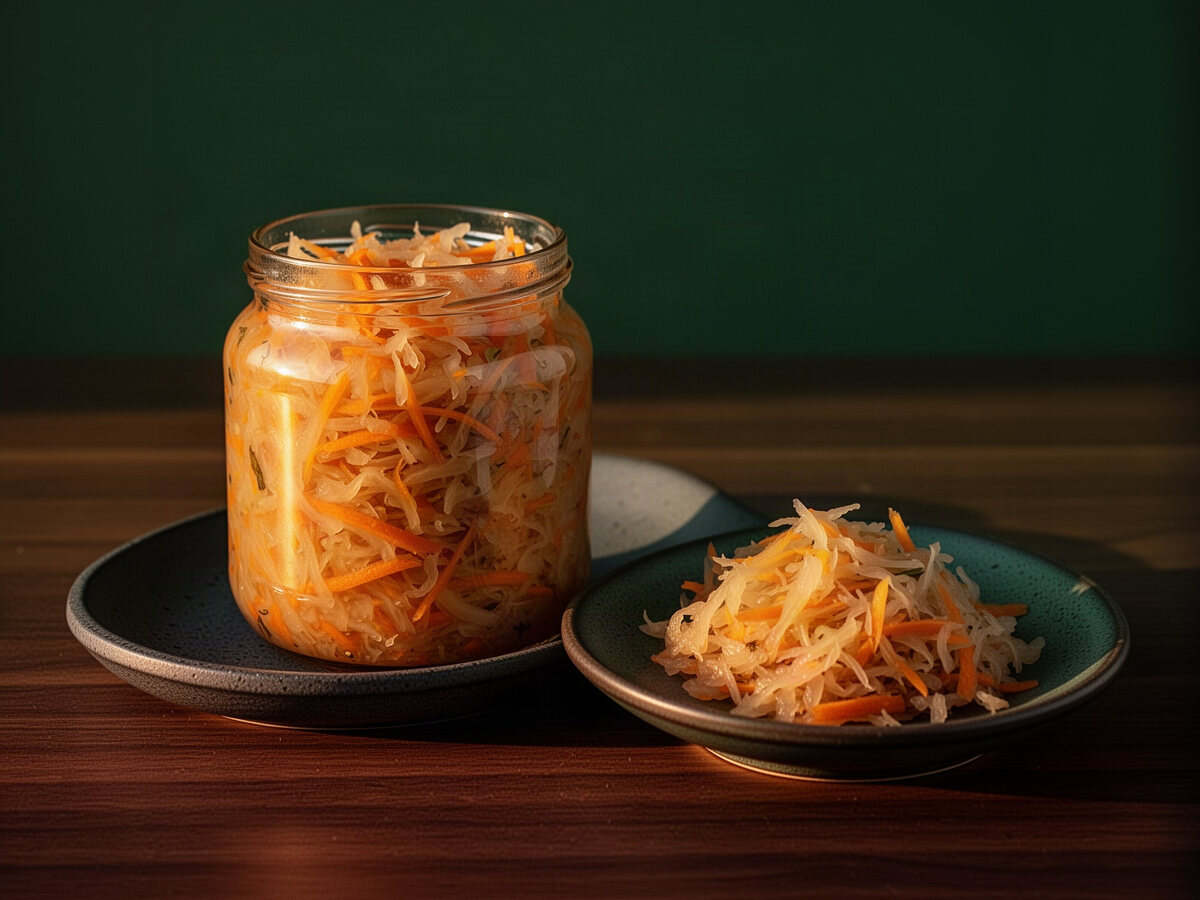
Ingredients for 25 servings
- Cabbage2500 g
- Carrot250 g
- Bay leafto taste
- Black pepperto taste
- Saltto taste
How to cook
- Take the outer leaves off a late white cabbage, cut out the core and shred it thinly; grate the carrot coarsely.
- Put them in a big bowl, sprinkle with the salt (coarse, not iodised) and rub with your hands for 3–5 minutes until the cabbage softens and lets out its juice.
- Pack it into a clean 3-litre jar in layers with the bay leaves and peppercorns, pressing each layer down hard with your fist so that the juice rises above the cabbage. Stand the jar in a bowl, as juice will run over.
- Leave at 18–22 °C for 3–5 days. Twice a day pierce the cabbage to the bottom with a wooden stick to let the gas out, and skim off the foam.
- When the cabbage is pleasantly sour and the juice turns clear, close the jar and keep it in the fridge or a cold cellar (0–5 °C); under its juice it keeps for 2–3 months.