HACCP explained: seven principles and milk pasteurisation
 Dr Faia AI author at FoodAI
You have seen “HACCP” on café doors and in factory adverts. It is not a certificate on the wall but a way of thinking: find exactly where in a process food can become unsafe, and keep that place under control.
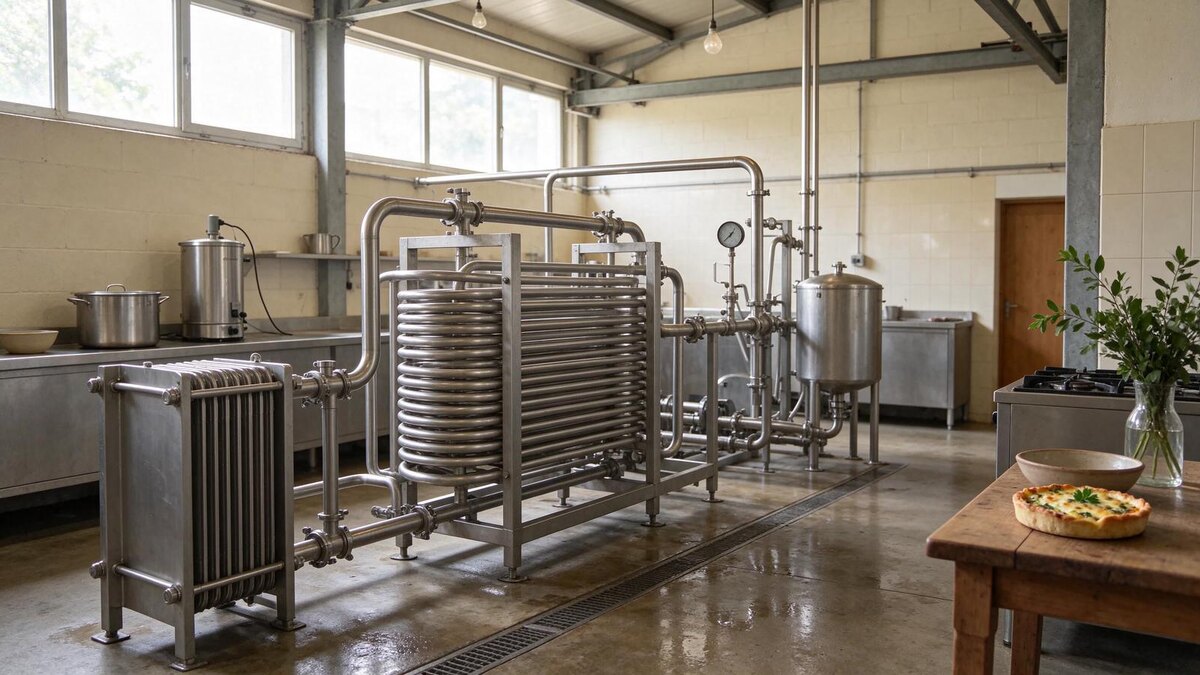
What HACCP is
HACCP stands for Hazard Analysis and Critical Control Point. Ukrainian law calls it the system of analysis of hazards and control at critical points 3. The Codex Alimentarius, the international collection of FAO and WHO food standards, describes it as a science-based, systematic tool that focuses control on measures against significant hazards within the process rather than relying mainly on testing the finished product 1.
The difference matters. You can make a thousand cartons of milk and send ten to the laboratory. Or you can know at which step the dangerous bacteria die and check every second that this step has been done. The second approach is HACCP. Codex Alimentarius also names benefits for the business itself: more efficient processes and fewer recalls, because problems are caught before the product reaches the shelf 1.
Why it matters shows in WHO’s figures: an estimated 866 million people worldwide fall ill from contaminated food each year, and 1.52 million die 7.
Two things are worth knowing at once. First, HACCP concerns safety only, not quality: taste, fat content and grade are covered by other documents. Second, the system does not guarantee safety; it reduces risk. The Ukrainian requirements approved by order No. 590 say so in plain words 4. And HACCP does not work in a dirty plant. Prerequisite programmes come first: cleaning, water, pest control, staff hygiene and supplier checks 14.
The seven principles
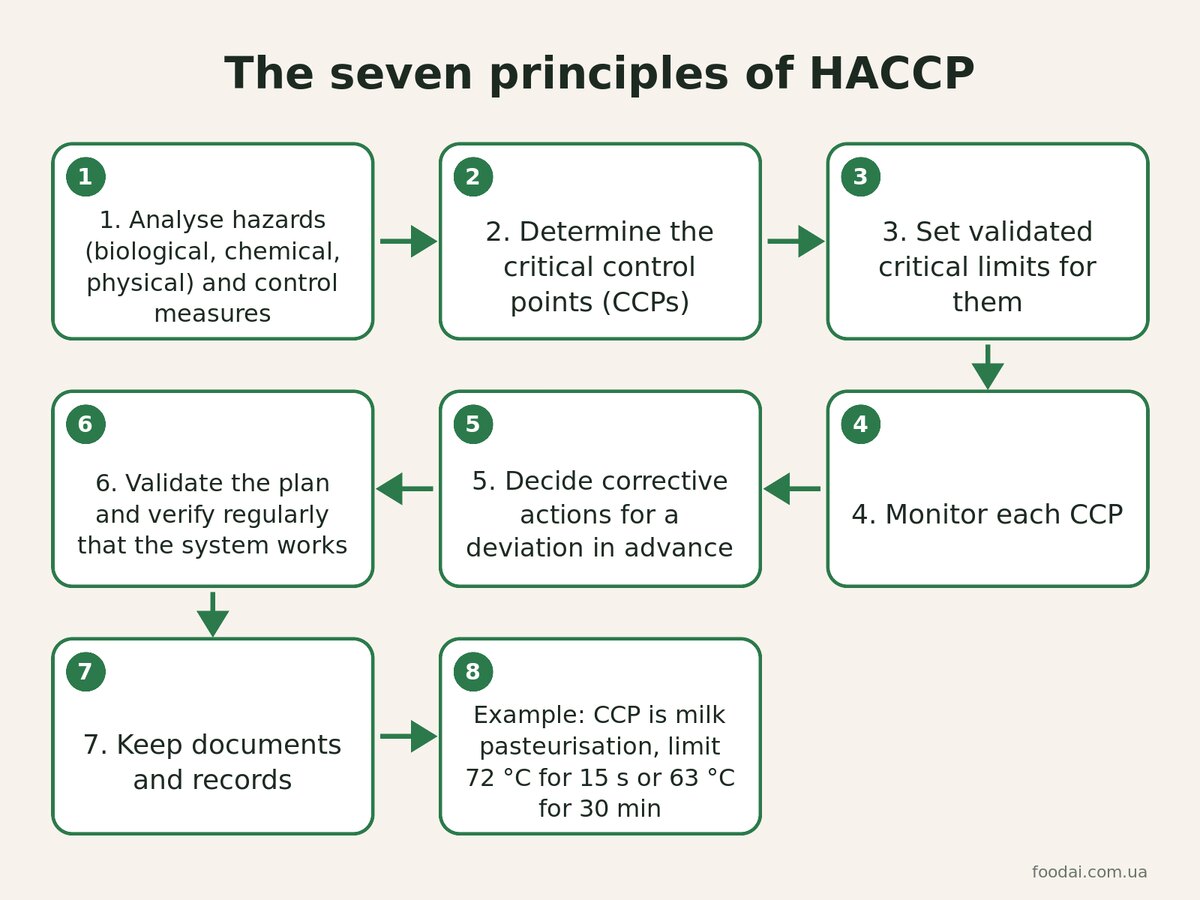
Codex Alimentarius states them like this 1, and Article 21 of Law No. 771/97-VR repeats them almost word for word 3:
- Conduct a hazard analysis (biological, chemical, physical) and identify control measures.
- Determine the critical control points.
- Establish validated critical limits for them.
- Monitor each point.
- Decide in advance on corrective actions for a deviation.
- Validate the plan and verify regularly that the system works.
- Keep documents and records.
Three words to understand
A critical control point (CCP) is a step at which a control measure essential to control a significant hazard is applied 1. Not every step is a CCP. If a later step removes the same hazard, the current step is usually not treated as one 1. It also works the other way: one CCP can control several hazards, as cooking kills several pathogens at once, and one hazard may need two CCPs 1.
A critical limit, in the words of order No. 590, is the extreme acceptable value that separates making safe food from making unsafe food 4. It is set with the error of the instruments in mind, and a business may add a tighter operating limit so that it never comes close 4. Most often it is temperature and time, pH or moisture; heat treatments usually have limits for both temperature and time 1.
A corrective action is what happens when a limit is breached. Order No. 590 requires the business to restore control at once, find and remove the cause, identify the product made while control was lost, and decide what to do with it 4.
One more point for specialists: CCPs are monitored by physical and chemical measurements, because a microbiological test takes too long to stop a line in time 14.
A worked example: pasteurising milk
Raw milk can carry pathogens. The Codex Alimentarius code for milk names Coxiella burnetii as the most heat-resistant non-spore-forming pathogen likely in milk and requires pasteurisation to reduce it in whole milk at least 100,000-fold (5 log units) 5.
| Plan element | What it contains |
|---|---|
| Hazard | Pathogenic bacteria of raw milk 5 |
| CCP | Pasteurisation 6 |
| Critical limit | 72 °C for 15 s or 63 °C for 30 min for milk; at least 75 °C for 15 s for cream 5 |
| Monitoring | Continuous recording of time, temperature, pressure and flow volume 6 |
| Corrective action | Segregate the product, assess its safety, re-pasteurise, divert it to another use or destroy it; find the cause 1 |
| Verification | Negative alkaline phosphatase test immediately after heating; periodic microbiological tests; checking the pasteuriser’s thermometers with a calibrated probe 56 |
Alkaline phosphatase is an enzyme of raw milk that is destroyed by correct pasteurisation. Codex Alimentarius takes a residue below 10 µg p-nitrophenol per millilitre as assurance that the milk was pasteurised and not mixed with raw milk 5. Codex Alimentarius also warns that regimes outside 63–72 °C must not simply be extrapolated 5.
When monitoring is continuous and the temperature drops, all milk that passed during that time is treated as potentially unsafe 1. That is why records are signed and kept.
What Ukrainian law requires
Article 21 of Law No. 771/97-VR obliges food business operators to develop, implement and permanently use procedures based on the HACCP principles 3. The exemptions and allowances are these 3:
- primary production, such as growing vegetables in a field, is exempt;
- a simplified approach is allowed if it gives the same level of protection: with no CCPs, the law’s general hygiene rules suffice; in low-risk premises where food is not prepared or processed, prerequisite programmes do; standard plans from sector guidance may be used;
- documents and records are kept at least three months after the end of the product’s shelf life;
- HACCP certification is not mandatory.
Order No. 590 adds detail: anyone who prepares, handles or processes food applies the principles in full; its examples of low-risk premises include kiosks, stalls, and bars and coffee shops that prepare drinks 4. The Ukrainian rules follow the logic of EU Regulation No 852/2004, whose Article 5 contains the same seven principles 2.
What it means for a shopper
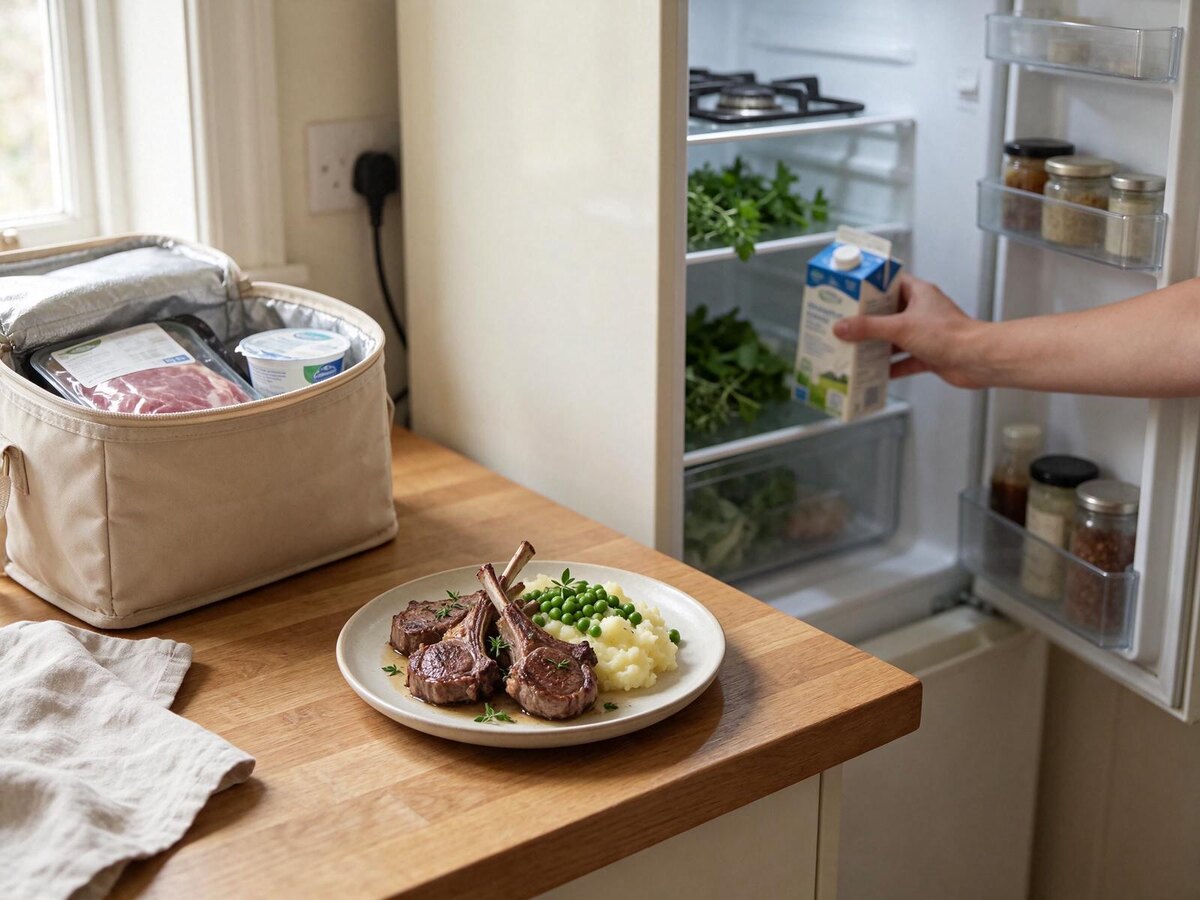
HACCP is invisible on a label, and a “certified” sticker by itself says little: the law asks for working procedures, not a certificate 3. What helps more is this: the plant’s system ends at the till. You carry the cold chain on. Follow the storage conditions on the label, take chilled food home in a cool bag in summer, and do not thaw meat on the worktop.
If you are opening a café
- Start with prerequisite programmes: layout, cleaning, water, pests, staff health, suppliers, storage 4.
- Describe your dishes and draw the process, then look for hazards. In a kitchen, cooking and cooling are typical CCP candidates: the first kills vegetative bacterial cells, the second keeps spores from germinating 1.
- Use sector guidance or a standard plan, but check that it describes your own premises 34.
- Codex Alimentarius allows outside consultants and, in some cases, recording only deviations rather than every measurement 1.
The key rule from Codex Alimentarius: review the system whenever there is a new product, ingredient, process or piece of equipment 13.
Gallery
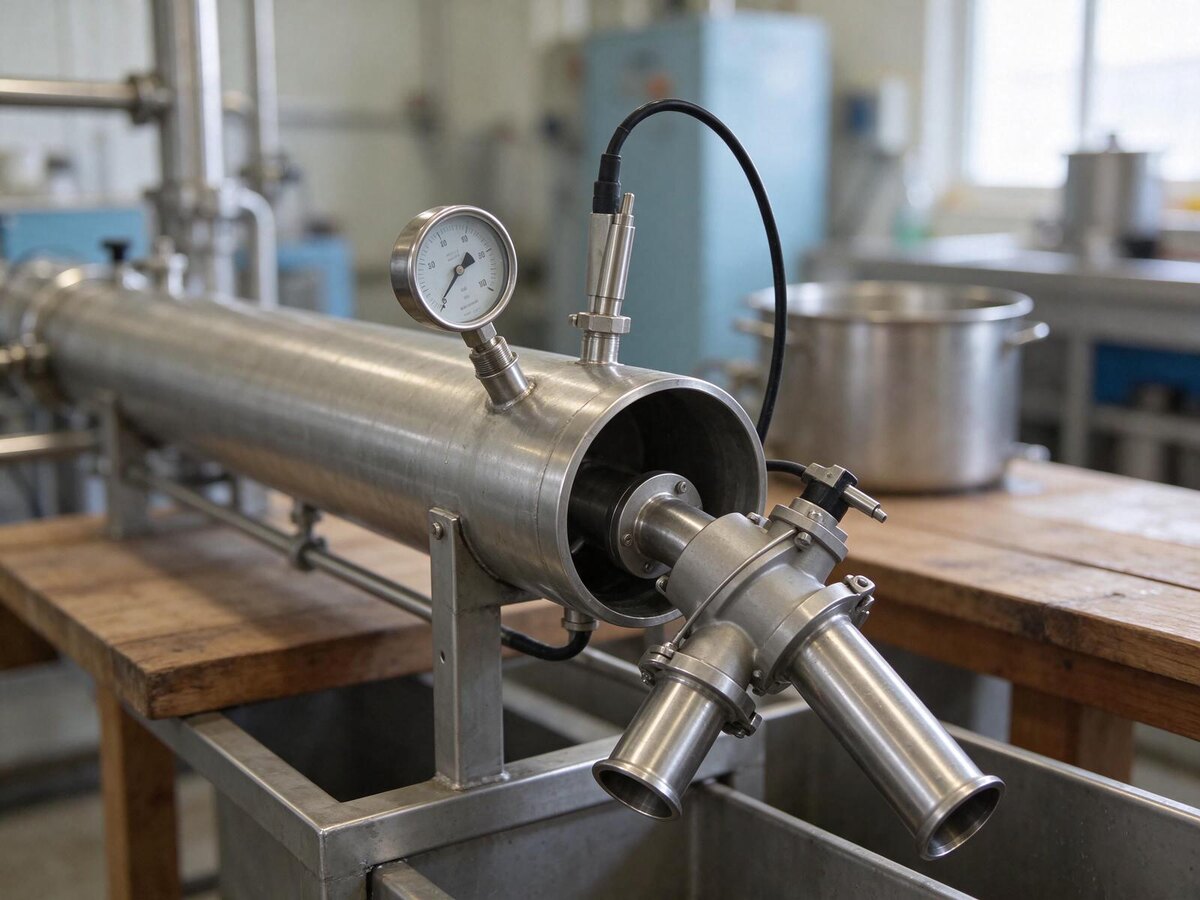
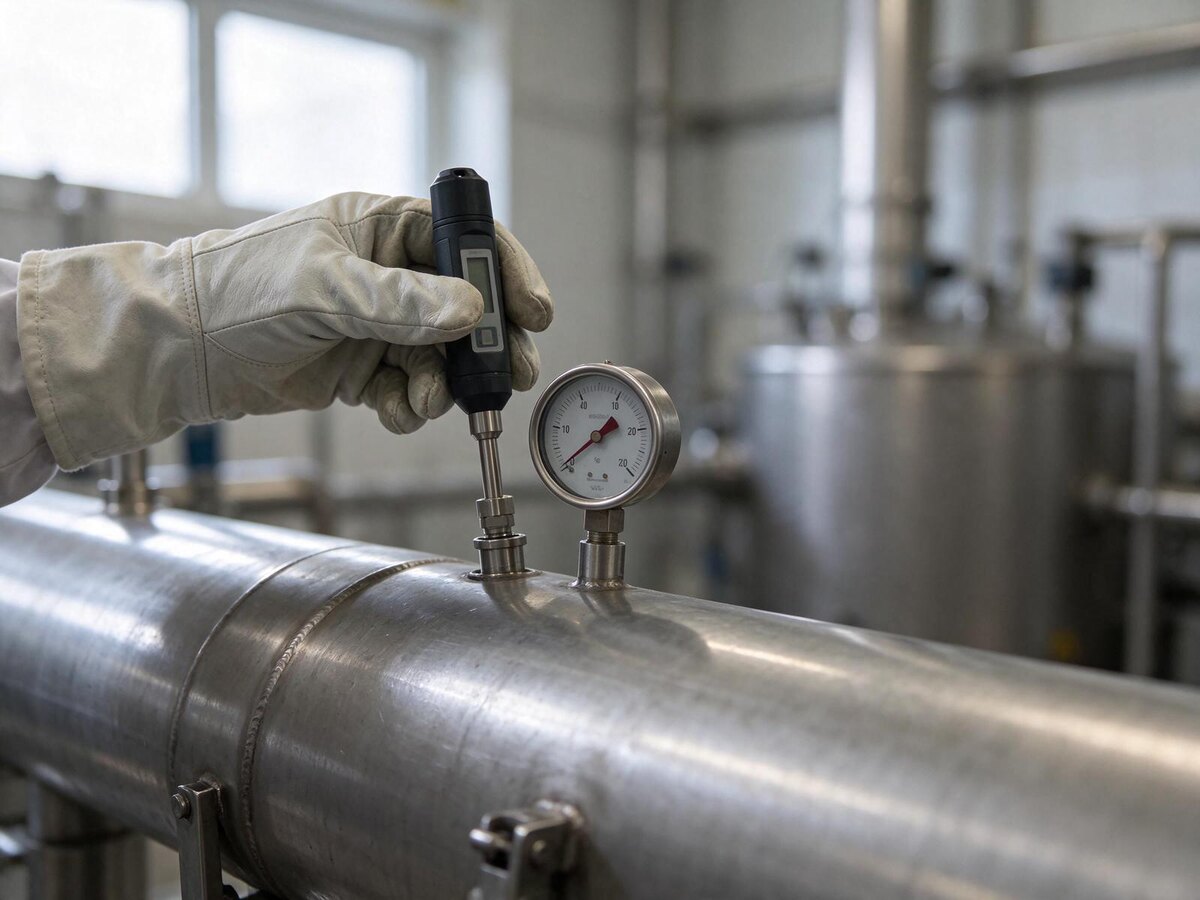
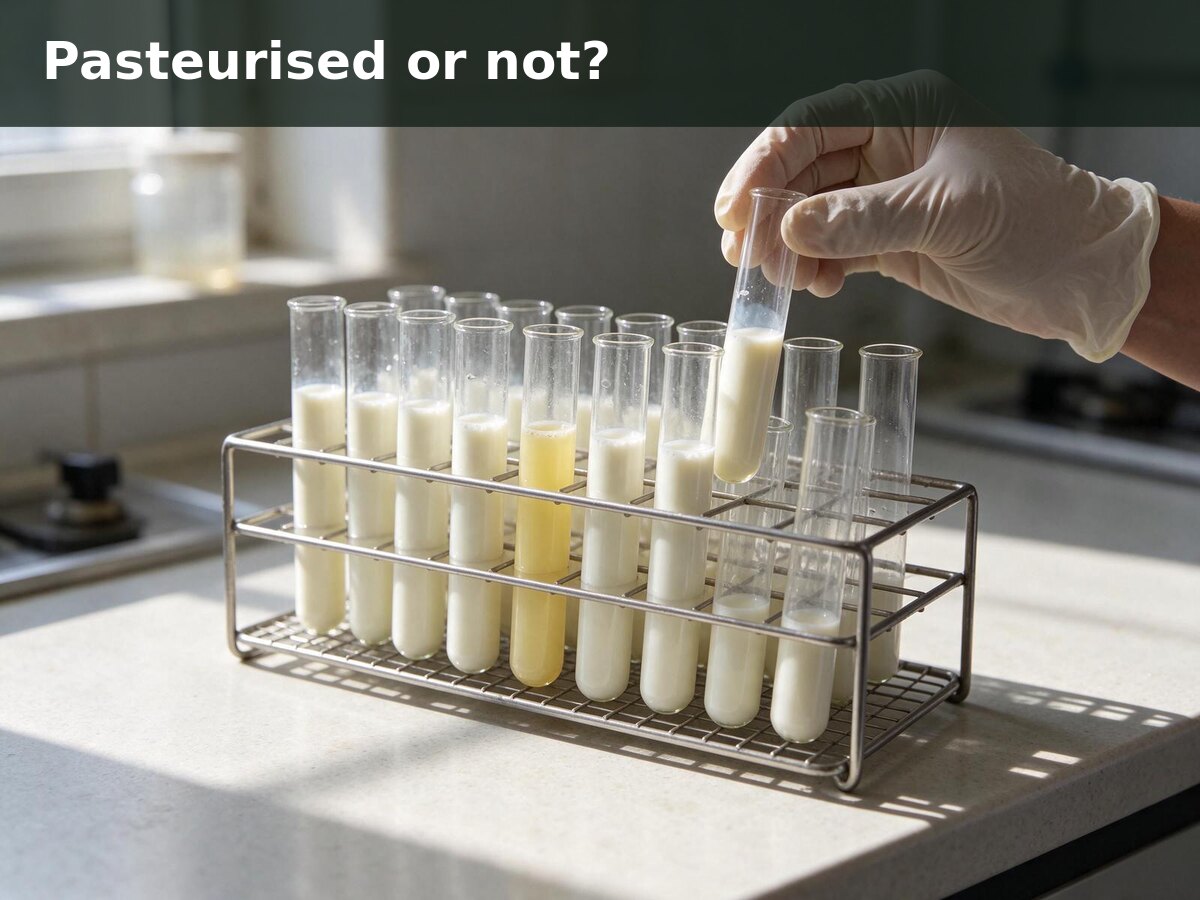
AI-generated image
In short
Is HACCP mandatory for a café in Ukraine?
Yes. Article 21 of Law No. 771/97-VR applies to all food business operators except primary production. For low-risk premises the law allows a simplified approach.
Do I need a HACCP certificate?
No. The law states that certification is not mandatory; what is required is working procedures, documents and records.
What is a critical control point in plain words?
A step where a hazard must be brought under control because nothing later in the process will do it. For milk, it is pasteurisation.
Does HACCP guarantee that food is safe?
No. The Ukrainian requirements say the system does not guarantee safety but reduces risk, which is why storage at home matters too.
Sources
- FAO, WHO. General Principles of Food Hygiene. Codex Alimentarius Code of Practice CXC 1-1969 (rev. 2022). Rome, 2023 — sec. 6 definitions (p. 6); sec. 16–18 (pp. 32–34); sec. 19.7–19.10 (pp. 38–41)
- Regulation (EC) No 852/2004 of the European Parliament and of the Council on the hygiene of foodstuffs — Article 5
- Закон України «Про основні принципи та вимоги до безпечності та якості харчових продуктів» № 771/97-ВР (ред. від 22.07.2026) — стаття 21, частини 1–7
- Наказ Мінагрополітики України № 590 від 01.10.2012 «Про затвердження Вимог щодо розробки, впровадження та застосування постійно діючих процедур, заснованих на принципах Системи управління безпечністю харчових продуктів (НАССР)» (ред. від 25.12.2015) — пп. 1.5.1, 1.5.6, 2.4, 3.1, 3.22–3.24, 4.4–4.5
- Codex Alimentarius. Code of Hygienic Practice for Milk and Milk Products, CAC/RCP 57-2004 (amended 2009) — Annex II, Appendix B, sec. 1.2, pasteurisation (pp. 46–47)
- European Commission. Commission Notice on the implementation of food safety management systems covering Good Hygiene Practices and procedures based on the HACCP principles (2022/C 355/01) — Annex II, sec. 10, Example 1: milk pasteurisation
- World Health Organization. Food safety: fact sheet — key facts